
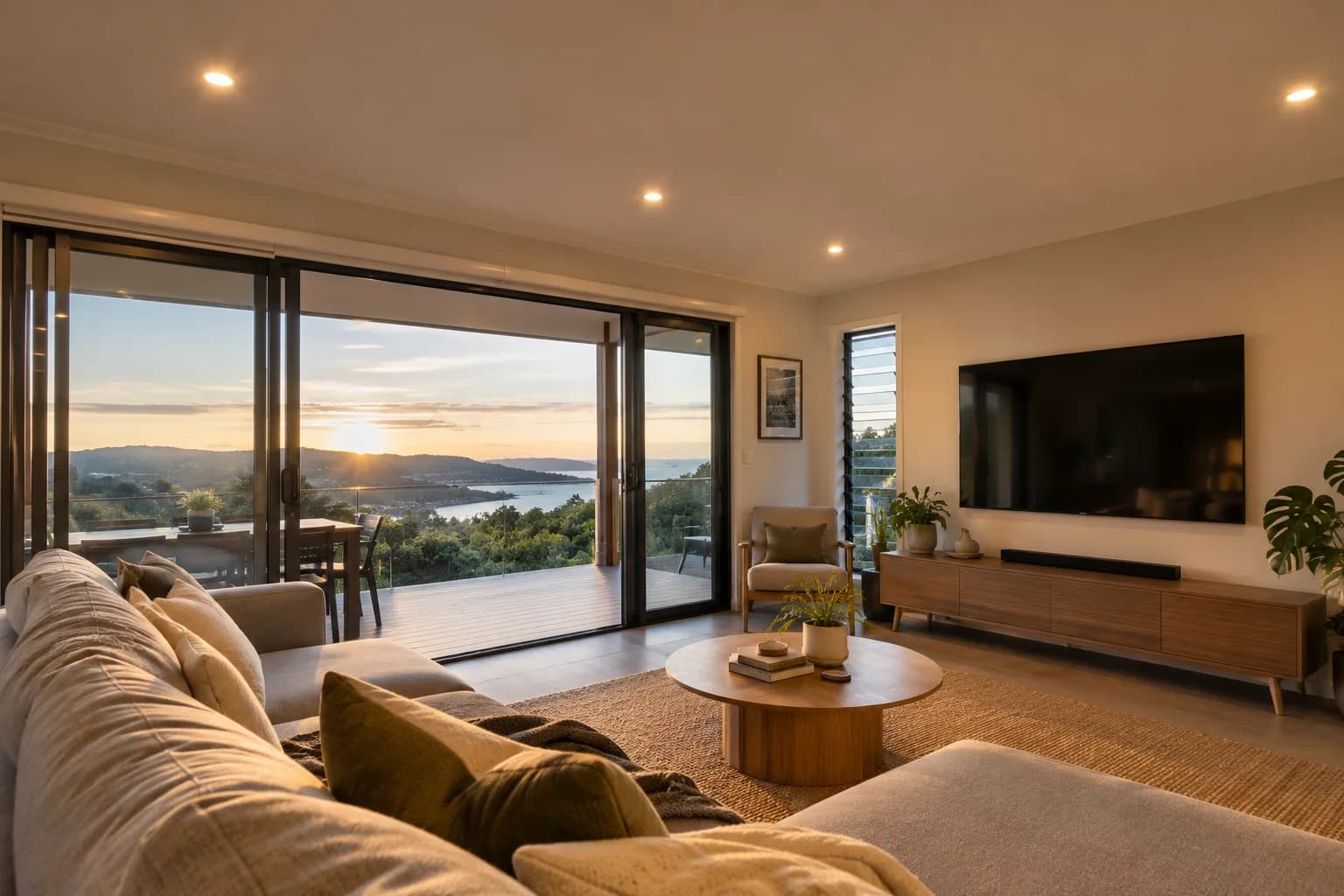
Better lighting, lower power bills and a more comfortable home.
Upgrading your old lights to modern LEDs is one of the simplest and most cost-effective improvements you can make to your home. Not only can LED lighting significantly reduce electricity consumption, but it can also transform how your home looks and feels.
If your home still has older incandescent bulbs, halogen downlights or fluorescent fittings, you could be using considerably more electricity than necessary — and you might not be getting the quality of light you deserve.
Modern LED lighting offers better efficiency, longer lifespans, improved brightness and a choice of light colours to suit different rooms.
Here's what you should know before making the switch.
1. How Much Electricity Can LED Lights Save?
One of the biggest advantages of LED lighting is its energy efficiency.
Traditional incandescent bulbs waste much of their electricity producing heat rather than visible light. LEDs are far more efficient, converting more of the electricity they consume into useful illumination.
In many cases, modern LEDs use 80–90% less electricity than traditional incandescent or halogen lighting, while producing a comparable amount of light.
Here are some typical comparisons:
| Older lighting | LED replacement | Approximate energy saving |
|---|---|---|
| 60W incandescent bulb | 6–9W LED | 85–90% |
| 100W incandescent bulb | 10–15W LED | 85–90% |
| 50W halogen downlight | 5–7W LED | 86–90% |
| 35W halogen downlight | 4–6W LED | 83–89% |
These are approximate comparisons. Actual light output varies between products, so it's important to compare lumens rather than wattage alone.
What does that mean for your power bill?
Consider a home with 20 older 50W halogen downlights.
If all 20 lights are switched on, they consume approximately 1,000 watts (1kW) of electricity.
Replacing those lights with modern 6W LED downlights would reduce consumption to approximately 120 watts.
That's an 88% reduction in electricity used for lighting.
If those 20 lights operate for an average of four hours per day, at an electricity price of 30 cents per kWh, the comparison looks like this:
| Halogen | LED | |
|---|---|---|
| Total power consumption | 1,000W | 120W |
| Daily electricity use | 4kWh | 0.48kWh |
| Annual electricity cost | $438 | $53 |
| Annual savings | $385 |
That's nearly $400 per year saved simply by changing the lighting.
Actual savings depend on how frequently you use your lights and your electricity tariff, but the potential savings can be substantial.
2. Better Lighting Makes Everyday Life Easier
While electricity savings are a major benefit, one of the most noticeable improvements from upgrading to LED is simply having better light where you need it.
Many older homes have lighting that is poorly positioned, too dim or unevenly distributed throughout the room.
Modern LED fittings are available in a wide range of brightness levels and beam angles, making it easier to create lighting that suits how a room is actually used.
Kitchens
Good lighting makes preparing meals, reading recipes and working at kitchen benches easier.
LED downlights can provide bright, even illumination across the kitchen, while additional lighting beneath overhead cupboards can help eliminate shadows on work surfaces.
Living rooms
Living areas benefit from flexible lighting.
Bright lighting can make reading and everyday activities easier, while dimmable LEDs allow you to create a more relaxed atmosphere in the evening.
Bedrooms
LED lighting can provide comfortable general illumination while allowing you to choose warmer light colours that suit a relaxing environment.
Garages and workshops
These areas often benefit from brighter lighting that makes it easier to see tools, read labels and work safely.
Replacing older fluorescent fittings with suitable LED alternatives can make a noticeable difference.
Bathrooms
Modern LED downlights can provide clear, even illumination, particularly around mirrors and vanities.
Choosing appropriately rated fittings is important because bathrooms have specific electrical safety requirements.
Our tip: If your existing lighting feels dim, simply replacing the bulbs might not be enough. Sometimes changing the position, number or type of light fittings can make a much bigger difference.
3. Choosing the Right Light Colour for Your Home
One of the advantages of modern LED lighting is the ability to choose the colour temperature of your lights.
Colour temperature is measured in Kelvin (K), and it describes whether light appears warm and yellowish or cooler and whiter.
The three most common options for residential lighting are:
Warm White — 2700K–3000K
Warm-white lighting creates a soft, welcoming atmosphere similar to traditional incandescent bulbs.
It's particularly suited to:
- Living rooms
- Bedrooms
- Dining rooms
- Lounges
- Relaxed entertaining areas
Warm white is often preferred in rooms where comfort and relaxation are the priority.
Natural White — 4000K
Natural white produces a cleaner, more neutral appearance.
It's a popular choice for areas where good visibility is important.
Ideal locations include:
- Kitchens
- Bathrooms
- Laundries
- Home offices
- Garages
- Workshops
Many people find natural-white lighting particularly useful for reading, preparing food and working on detailed tasks.
Cool White — 5000K–6500K
Cool-white lighting has a noticeably whiter, sometimes slightly bluish appearance.
It's commonly used in commercial spaces, workshops and other areas requiring bright task lighting.
For most residential living areas, we generally prefer warmer colour temperatures, as very cool lighting can make a home feel less inviting.
Can't decide? Choose a colour-switchable LED
Some modern LED downlights allow you to select between different colour temperatures using a switch on the fitting.
For example, a downlight might offer 3000K, 4000K and 5700K settings.
This means you can choose the colour that best suits each room without having to purchase completely different light fittings.
Our tip: Try to keep the colour temperature consistent within each room. Mixing warm-white and cool-white lighting in the same space can create an uneven appearance.
4. Why Modern LED Downlights Are a Big Improvement
Older halogen downlights were very popular in New Zealand homes, particularly throughout the 1990s and 2000s.
However, they have several disadvantages compared with modern LED alternatives.
They produce a lot of heat
Traditional halogen lamps generate considerable heat.
This wastes electricity and can contribute to unwanted heat inside your home, particularly during summer.
Modern LEDs run much more efficiently, although they still produce some heat and require appropriate thermal management.
They use considerably more electricity
As shown earlier, a traditional 50W halogen downlight can often be replaced with an LED consuming around 5–7W.
When you have numerous downlights throughout your home, those savings quickly add up.
Older downlights may affect ceiling insulation
Some older recessed light fittings require substantial clearance from ceiling insulation because of the heat they generate.
Modern appropriately rated LED downlights can allow insulation to be installed closer to, or over, the fitting, depending on the manufacturer's specifications.
This can help reduce gaps in ceiling insulation and improve your home's thermal performance.
However, not every LED fitting is suitable for insulation coverage, so the correct product selection is important.
Modern LEDs provide better options
Modern LED downlights are available with features including:
- Dimmable operation
- Adjustable colour temperatures
- Different beam angles
- Low-glare designs
- Moisture-resistant options
- Smart lighting compatibility
- Various sizes and styles
These options make it easier to customise lighting throughout your home.
5. Do LED Lights Last Longer?
Yes. Quality LED lights generally last considerably longer than traditional incandescent or halogen bulbs.
Typical rated lifespans might include:
| Light type | Approximate rated lifespan |
|---|---|
| Incandescent bulb | 1,000 hours |
| Halogen bulb | 2,000 hours |
| LED light | 15,000–50,000 hours |
These are general estimates. Actual lifespan depends on product quality, operating conditions and installation.
For example, an LED rated for 25,000 hours and used for four hours per day has a theoretical operating lifespan of approximately 17 years.
That doesn't guarantee the light will last 17 years, but it demonstrates why LEDs can significantly reduce the inconvenience of replacing failed bulbs.
This is particularly useful for lights in high ceilings, stairwells and other difficult-to-access locations.
6. Can You Replace Existing Downlights Without Changing the Ceiling?
In many cases, yes.
Modern LED downlights are available in a variety of sizes, allowing us to replace older fittings using their existing ceiling openings.
This can make upgrading a straightforward process without requiring major alterations to your ceiling.
However, there are a few things that need to be checked.
Cut-out size: The new fitting needs to suit the existing ceiling hole.
Wiring and connections: Older wiring, transformers and connections need to be assessed for compatibility and safety.
Insulation requirements: The new fitting must be suitable for the ceiling construction and insulation arrangement.
Dimmers: Some older dimmer switches are not compatible with modern LED lights and may need replacing.
Condition of existing fittings: Depending on the age and condition of the installation, additional work may be necessary.
A qualified electrician can assess your existing lights and recommend the most practical replacement options.
7. Is It Worth Replacing Working Lights?
This is a common question.
If you already have modern, efficient LED lighting that provides good illumination, there may be little financial benefit in replacing it.
However, if your home still has older halogen downlights or incandescent bulbs, upgrading can make financial sense even when the existing lights are still working.
The electricity savings, improved lighting quality and reduced maintenance can make the investment worthwhile.
For example, replacing 20 halogen downlights that are used frequently could generate several hundred dollars in annual electricity savings.
However, the payback period depends on installation costs and how often the lights are used.
Lights that operate for several hours every day will generally provide greater savings than lights in rooms that are rarely used.
And remember, the benefits aren't purely financial.
Having better lighting throughout your home can improve comfort, visibility and the overall appearance of your living spaces.
8. What About LED Warranties?
Not all LED lights are created equal.
While inexpensive LED fittings are widely available, product quality can vary considerably.
Factors worth considering include:
- Light output and efficiency
- Colour consistency
- Flicker performance
- Expected lifespan
- Dimming compatibility
- Manufacturer warranty
- Availability of replacement fittings
At Gibson Electrical, we prefer using proven lighting products from reputable suppliers.
For example, selected Voltex LED downlights are available with warranties of up to seven years, providing additional confidence in the products being installed.
We can advise on suitable fittings based on your budget, the installation requirements and the type of lighting you're looking for.
9. Where Should You Start?
If you're considering upgrading the lighting throughout your home, you don't necessarily need to replace everything at once.
A practical approach is to begin with the areas where better lighting or electricity savings will make the biggest difference.
We generally suggest looking at:
1. Frequently used lights: Kitchens, living rooms and other areas where lights operate for several hours each day.
2. Older halogen downlights: These are often among the most worthwhile replacements because of their relatively high electricity consumption.
3. Poorly lit work areas: Kitchens, home offices, bathrooms and workshops where improved visibility would be valuable.
4. Difficult-to-reach fittings: Longer-lasting LEDs can reduce the inconvenience of frequent bulb changes.
5. Rooms needing a refresh: Modern lighting can dramatically change the appearance of a room without the cost of a full renovation.
You may be surprised at how much difference a relatively small lighting upgrade can make.
Ready to Upgrade Your Home's Lighting?
Replacing older lights with modern LEDs is one of the simplest ways to make your home more energy-efficient, comfortable and enjoyable to live in.
Whether you're looking to reduce electricity costs, improve lighting in your kitchen, replace old halogen downlights or update the appearance of your home, Gibson Electrical can help you choose and install the right lighting solution.
We can assess your existing fittings, recommend suitable replacements and explain the available options before any work begins.
Contact Gibson Electrical to discuss upgrading your home's lighting.
Explore our electrical services or LED lighting installation service.
✉️ office@gibsonelectric.co.nz
Serving Whangārei, Kerikeri and surrounding Northland areas.